Is the Rapture in the Bible? Separating Biblical Fact from Popular Fiction
Is the Rapture in the Bible? Discover the definitive scriptural analysis. Explore key passages, interpretations, and the theology behind this debated Christian doctrine. Get answers here.
Introduction
“Is the Rapture in the Bible?” has sparked intense debate among Christians for generations. For some, it’s a cornerstone of end-times belief, a promised event of glorious deliverance. For others, it’s a modern theological invention without clear biblical grounding. This article delves deep into the scriptures, tracing the origins of Rapture theology, examining key passages word-by-word, and exploring the historical context of this widely debated concept. Whether you’re a curious seeker or a seasoned theologian, this comprehensive guide aims to provide clarity on one of the most provocative topics in Christian eschatology.
What is the Rapture? Defining the Term about Is the Rapture in the Bible
Before we ask “Is the Rapture in the Bible?“, we must define it. In modern evangelical theology, the Rapture typically refers to a future event where Jesus Christ descends from heaven, resurrects deceased believers, and instantly translates living believers into glorified bodies, “catching them up” to meet Him in the air. This is generally portrayed as a sudden, secret event preceding a period of tribulation on Earth.
Crucially, the English word “rapture” itself does not appear in most Bible translations. It derives from the Latin raptio, meaning “seizing” or “carrying away,” which translates the Greek word harpazō found in key New Testament passages.
Key Biblical Passages: The Foundation of Rapture Theology about Is the Rapture in the Bible
Proponents of the Rapture doctrine point to several specific scriptures. Let’s examine them in their context.
1 Thessalonians 4:13-18 – The “Catching Up” Passage about Is the Rapture in the Bible
This is arguably the central text for Rapture belief.
“For the Lord himself will come down from heaven, with a loud command, with the voice of the archangel and with the trumpet call of God. And the dead in Christ will rise first. After that, we who are still alive and are left will be caught up together with them in the clouds to meet the Lord in the air. And so we will be with the Lord forever.” (1 Thessalonians 4:16-17, NIV, emphasis added)
The Greek phrase for “caught up” is harpagēsometha, from harpazō. This passage clearly describes a sudden, miraculous gathering of believers to Christ. However, the timing of this event—whether before, during, or after a period of tribulation—is not specified here.
1 Corinthians 15:51-52 – The “Twinkling of an Eye” Mystery about Is the Rapture in the Bible
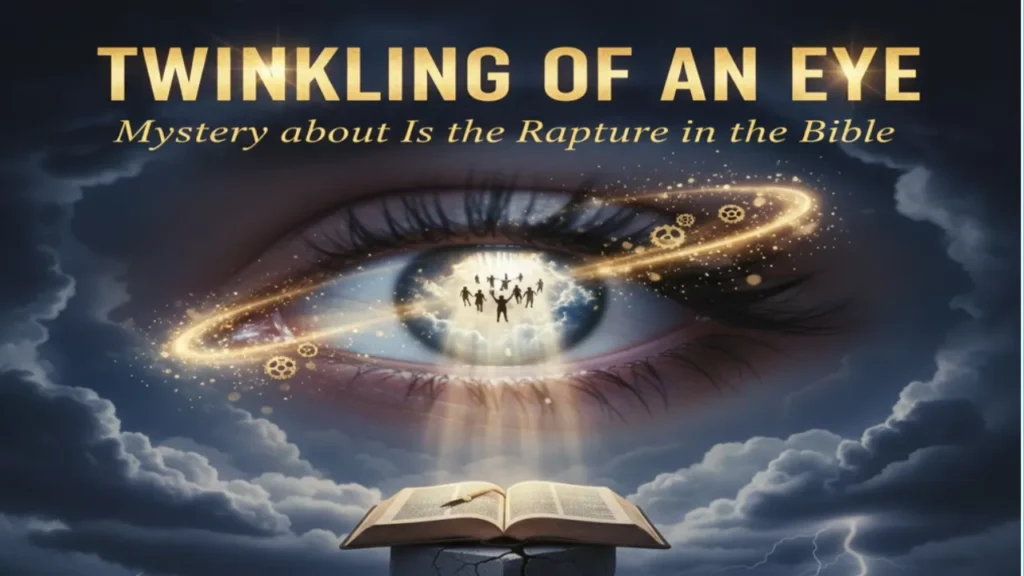
“Listen, I tell you a mystery: We will not all sleep, but we will all be changed— in a flash, in the twinkling of an eye, at the last trumpet. For the trumpet will sound, the dead will be raised imperishable, and we will be changed.” (1 Corinthians 15:51-52, NIV)
Paul speaks of an instantaneous transformation for both the dead and living believers at the “last trumpet.” This aligns with the 1 Thessalonians account but again focuses on the nature of the event, not its timeline relative to other end-time events.
Matthew 24:36-44 – The “One Taken” Reference about Is the Rapture in the Bible
“That is how it will be at the coming of the Son of Man. Two men will be in the field; one will be taken and the other left. Two women will be grinding with a hand mill; one will be taken and the other left.” (Matthew 24:39-41, NIV)
Many Rapture teachers cite this as a depiction of the selective, sudden removal of believers. However, context is critical. Earlier in the chapter, the “taken” are compared to those taken in judgment in Noah’s flood (v. 39). In the parallel Luke 17:34-37, the disciples ask, “Where, Lord?” and Jesus replies ominously, “Where there is a dead body, there the vultures will gather.” This suggests a taking for judgment rather than a taking to safety, complicating the common Rapture interpretation.
John 14:1-3 – The Promise of Return about Is the Rapture in the Bible
“My Father’s house has many rooms… I am going there to prepare a place for you. And if I go and prepare a place for you, I will come back and take you to be with me that you also may be where I am.” (John 14:2-3, NIV)
While a foundational promise of Christ’s return for His followers, this passage does not detail a “catching away” separate from the final Second Coming. It is a broad promise of reunion.
Revelation 3:10 & 4:1 – Symbols of Preservation and Ascent about Is the Rapture in the Bible
“Since you have kept my command to endure patiently, I will also keep you from the hour of trial that is going to come on the whole world to test the inhabitants of the earth.” (Revelation 3:10, NIV)
“After this I looked, and there before me was a door standing open in heaven. And the voice I had first heard speaking to me like a trumpet said, ‘Come up here,’ and I will show you what must take place after this.” (Revelation 4:1, NIV)
Many see in Revelation 3:10 a promise of a pre-tribulational Rapture (protection from the hour). Revelation 4:1 is viewed by some as a symbolic foreshadowing of the church being “called up” before the tribulation judgments (chapters 6-19). However, these are interpreted symbolically and are not explicit narratives of a Rapture event.
Historical Development of Rapture Doctrine for Is the Rapture in the Bible
The belief in a literal, imminent, pre-tribulation Rapture is a relatively recent development in church history.
- Early Church: Church fathers like Irenaeus and Justin Martyr wrote about a resurrection and gathering of believers at Christ’s return, but not a separate, secret event years prior.
- Medieval Period: Concepts of being “caught up” were generally merged with the singular, glorious Second Coming.
- John Nelson Darby (1800-1857): An Anglo-Irish preacher and founder of the Plymouth Brethren, Darby is widely credited with systematizing the modern pre-tribulation Rapture doctrine as part of his Dispensationalist theology.
- The Scofield Reference Bible (1909): This widely influential study Bible embedded Darby’s dispensationalist and pre-tribulation Rapture views into its notes, popularizing the doctrine throughout North America.
- 20th Century Popularity: Books like Hal Lindsey’s The Late, Great Planet Earth (1970) and the Left Behind series (1995+) cemented the pre-tribulation Rapture in popular evangelical culture.
Major Theological Views on the Rapture’s Timing about Is the Rapture in the Bible
The core debate isn’t just “Is the Rapture in the Bible?” but when believers understand this gathering to occur. Here are the three primary views:
Pre-Tribulation Rapture
Believers are caught up to heaven before a seven-year period of tribulation on Earth (based on an interpretation of Daniel’s 70th week in Daniel 9:24-27). This is the most popular view in modern American evangelicalism, emphasizing God’s promise to spare believers from divine wrath (1 Thessalonians 5:9).
Mid-Tribulation or Pre-Wrath Rapture . Is the Rapture in the Bible
Believers are raptured at or near the midpoint of the seven-year tribulation, or before the final “wrath” of God (the Bowl Judgments in Revelation) is poured out. This view distinguishes between general tribulation and God’s specific end-time wrath.
Post-Tribulation Rapture
The “catching up” (1 Thessalonians 4:17) happens at the end of the tribulation period, immediately coinciding with the glorious, visible Second Coming of Christ to the earth. The church is preserved through tribulation, not removed from it. This was the predominant view throughout most of church history.
Criticisms and Alternative Interpretations
Many theologians and denominations reject the idea of a separate Rapture event.
- Lack of Explicit Teaching: Critics argue that no clear, standalone “Rapture passage” exists; the doctrine is built by combining disparate verses from different contexts.
- Historical Novelty: The fact that a pre-tribulation Rapture wasn’t a formal doctrine for 1800 years is seen as a major red flag.
- The Nature of “Being Taken”: As noted with Matthew 24, Jesus’ examples of “one taken, one left” may describe judgment, not rescue.
- Unified Second Coming: Many see the Bible describing one, unified, triumphant return of Christ (e.g., Matthew 24:29-31; 2 Thessalonians 1:6-10; Revelation 19:11-21), not two separate comings (one secret, one public).
The Core Biblical Truths Everyone Agrees On

Despite the fierce debates, all orthodox Christians agree on these foundational truths derived from the passages in question:
- Jesus Christ Will Return. This is a non-negotiable tenet of the Christian faith.
- There Will Be a Resurrection of the Dead. All people will be raised—believers to life, unbelievers to judgment (John 5:28-29).
- Living Believers Will Be Transformed. At Christ’s coming, those alive in Him will receive new, imperishable, glorified bodies (1 Corinthians 15:50-53).
- Believers Will Be Gathered to Christ. The ultimate hope is eternal, physical union with Jesus.
- The Timing is Known Only to God. Scripture is clear: no one knows the day or hour (Matthew 24:36).
The Rapture is NOT in the Bible
The Rapture is NOT in the Bible?
Frequently Asked Questions about Is the Rapture in the Bible
H3: 1. Where does the word “Rapture” come from if it’s not in the Bible?
The term comes from the Latin raptio, used in the Latin Vulgate translation to render the Greek harpazō in 1 Thessalonians 4:17, meaning “to seize, carry off, or catch up.” So, while the English word isn’t there, the core concept of being “caught up” is explicitly biblical.
Did Jesus teach about the Rapture?
Jesus taught about His return and a gathering of His elect (Matthew 24:30-31). However, whether He taught a secret rapture separate from His final, visible return is a matter of interpretation. Most scholars see His teaching pointing to a single, climactic event.
What is the main verse used to support the Rapture?
1 Thessalonians 4:17 is the cornerstone: “…we who are alive, who are left, will be caught up together with them in the clouds to meet the Lord in the air.”
What do critics say is the biggest problem with the Rapture doctrine?
The most common criticism is that a pre-tribulation Rapture is a modern (19th-century) invention not found in historic Christian creeds or the writings of the early church fathers. It requires a very specific, discontinuous reading of biblical prophecy.
Should belief in a specific Rapture timing be essential for Christians?
No. Belief in the personal, visible return of Christ is essential. The specific timing of the gathering of believers (pre-, mid-, or post-tribulation) is a secondary doctrinal issue over which sincere, Bible-believing Christians can disagree while maintaining fellowship.
Conclusion about Is the Rapture in the Bible
So, is the Rapture in the Bible? The answer is nuanced. The specific event of believers being “caught up” to meet Christ is explicitly described in Scripture (1 Thessalonians 4:17). This is a biblical truth that offers immense hope. However, the popular conception of a secret, pre-tribulation Rapture—as a distinct event years before Christ’s final return—is a matter of theological interpretation, not an explicitly spelled-out biblical sequence.
The Bible is clear on our blessed hope: Jesus is coming back, the dead will be raised, the living in Christ will be transformed, and we will forever be with the Lord. This glorious promise is far more important than figuring out a prophetic timeline. Let this truth anchor your soul and motivate you to live a life of holiness, hope, and urgent mission.
What’s your perspective on the Rapture? Do you lean towards a pre-, mid-, or post-tribulation view, or do you see it differently? Share your thoughts in the comments below and continue your study with our related article on “The Second Coming of Christ in Scripture.”
| I Am So Glad That Jesus Loves Me Lyrics | We Are Standing On Holy Ground Lyrics |
| Christian song with lyrics | Holy Spirit Come Lyrics |
Is the Rapture in the Bible